Skip to content

By continuing to use this site, you consent to our use of cookies to personalize your experience and to analyze website traffic. Learn more in our Privacy Policy.

See results of a survey of people who tube feed conducted by Alcresta and the Oley Foundation #

#

Tube-feeding tips & tools

RELiZORB (immobilized lipase) cartridge

Learn about setups for RELiZORB

RELiZORB is designed to connect in-line to a variety of tube-feeding setups to help meet your needs

RELiZORB setup procedures depend on feeding type (ie, pump or syringe) and enteral nutrition volume

See below for video and written instructions for tube-feeding setups. See the RELiZORB Compatibility Guide for details on compatible pumps and enteral nutrition.

Enteral pump setup for single (≤500 mL) and tandem (>500–1000 mL) use*

Single use for 500mL with an enteral feeding pump

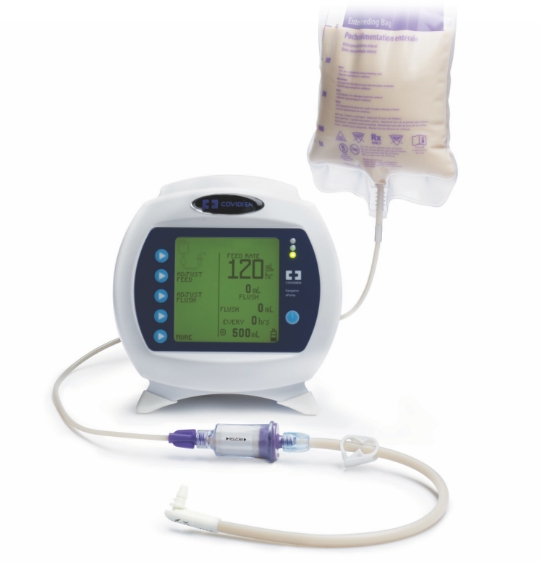
For volumes up to 500 mL, connect 1 RELiZORB cartridge to the end of the feeding-pump tubing set.

Enteral pump flow rate: 10-400 mL/hr

Max cartridges/Day:
>6 months old: 6
≤6 months old: 2

Tandem use for >500-1,000mL with an enteral feeding pump

In people >6 months of age and for volumes greater than 500 mL and up to 1000 mL, connect 2 RELiZORB cartridges in a tandem configuration, then connect to the end of the feeding-pump tubing set.

Enteral pump flow rate: 24-150 mL/hr

Max Cartridges/Day: 6 (3 tandem configurations)

1. Set up the pump and enteral feeding pump tubing set per the pump manufacturer’s instructions.

2. For volumes up to 500 mL, connect 1 RELiZORB cartridge to the end of the feeding pump tubing set. For volumes greater than 500 mL and up to 1000 mL, connect 2 RELiZORB cartridges in a tandem configuration and connect to the end of the feeding pump tubing set.

3. Prime the enteral feeding pump tubing. Then manually prime the enteral nutrition through RELiZORB up to the outlet by holding the prime button on the feeding pump.

Note: Ensure enteral nutrition does not come out of the RELiZORB outlet. If enteral nutrition drips out, wipe it away with a damp cloth or gauze and dry. Enteral nutrition residue in connections can harden, causing difficulty when disconnecting.

4. Connect the RELiZORB outlet to the patient extension set or enteral feeding tube that connects to the patient. If a patient extension set is being used, follow the pump manufacturer’s instructions to prime the enteral nutrition to the end of the extension set.

5. Set the pump to the prescribed flow rate. Proceed with the feeding.

RELiZORB is for use with pasteurized human milk and compatible enteral and infant formulas only. Do not administer medications, flushes, or nonenteral formula through the RELiZORB cartridge. If medications or flush solutions are added before the cartridge, RELiZORB should be discarded. See further details on page 4 of the RELiZORB Instructions for Use.

Push syringe setup for a bolus feed (≤250 mL)

Note: Approximately 2 mL of enteral nutrition is retained in the RELiZORB cartridge during bolus feeding.

1. Pour the required volume of enteral nutrition into a clean container.

2. Draw the enteral nutrition up into the appropriately sized syringe. Remove any air from the syringe and wipe the syringe clean of any excess enteral nutrition.

3. With syringe tip facing up, connect the RELiZORB cartridge by inserting the syringe tip into the inlet fitting of RELiZORB with a gentle twist.

Secure the RELiZORB cartridge by inserting the syringe

4. With the RELiZORB outlet facing up, gently press the syringe plunger to prime the enteral nutrition through RELiZORB and release excess air.

5. Flip the enteral syringe and RELiZORB connection over. Connect RELiZORB to the patient extension set or the enteral feeding tube that connects to the patient. If a patient extension set is being used, prime the enteral nutrition to the end of the patient extension set.

Flip the configuration over and secure the feeding tube

6. Unclamp the feeding tube and gently push the syringe plunger so the enteral nutrition flows through RELiZORB. Do not rush the bolus feed; consult with your doctor on how long a bolus feed should take.

Note: You may also use a syringe pump by inserting the enteral syringe and RELiZORB configuration into a syringe pump for feeding administration.

RELiZORB is for use with pasteurized human milk and compatible enteral and infant formulas only. Do not administer medications, flushes, or nonenteral formula through the RELiZORB cartridge. If medications or flush solutions are added before the cartridge, RELiZORB should be discarded. See further details on page 7 of the RELiZORB Instructions for Use.

Gravity syringe setup for a bolus feed (≤250 mL)

Note: Approximately 2 mL of enteral nutrition is retained in the RELiZORB cartridge during bolus feeding.

1. Pour the required volume of enteral nutrition into a clean container.

2. Using an enteral syringe, draw up a small amount of enteral nutrition that will be enough to prime the RELiZORB cartridge (approximately 5 mL) plus the additional amount needed to prime the extension set tubing. Remove any air from the syringe and wipe the syringe clean of any excess enteral nutrition.

3. With the syringe tip facing up, connect the RELiZORB cartridge by inserting the syringe tip into the inlet fitting of RELiZORB with a gentle twist.

4. With the RELiZORB outlet facing up, gently press the syringe plunger to prime the enteral nutrition through RELiZORB and release excess air.

5. Flip the enteral syringe and RELiZORB connection over. Connect RELiZORB to the patient extension set. Gently press the syringe plunger to prime the enteral nutrition through the extension set.

Secure the RELiZORB cartridge by inserting the syringe

6. Close the clamp on the extension set, then disconnect the enteral syringe from RELiZORB.

Proceed with gravity feeding

7. Take the plunger out of the enteral syringe, then reattach the empty enteral syringe to the RELiZORB and extension set setup.

8. Slowly pour the required amount of enteral nutrition into the syringe.

9. Hold the syringe at a comfortable height and unclamp or open the extension set clamp, allowing enteral nutrition to flow through the feeding tube. Continue adding enteral nutrition to the syringe until the full volume is delivered.

Note: To maintain flow through the cartridge, ensure that there is enteral nutrition in the enteral syringe until the full feeding has been delivered.

RELiZORB is for use with pasteurized human milk and compatible enteral and infant formulas only. Do not administer medications, flushes, or nonenteral formula through the RELiZORB cartridge. If medications or flush solutions are added before the cartridge, RELiZORB should be discarded. See further details on page 9 of the RELiZORB Instructions for Use.

One of the things I love about RELiZORB is just how easy it is to use and how easy it is to incorporate into [a] daily routine.

— Dr. Sivan Kinberg

Important setup information

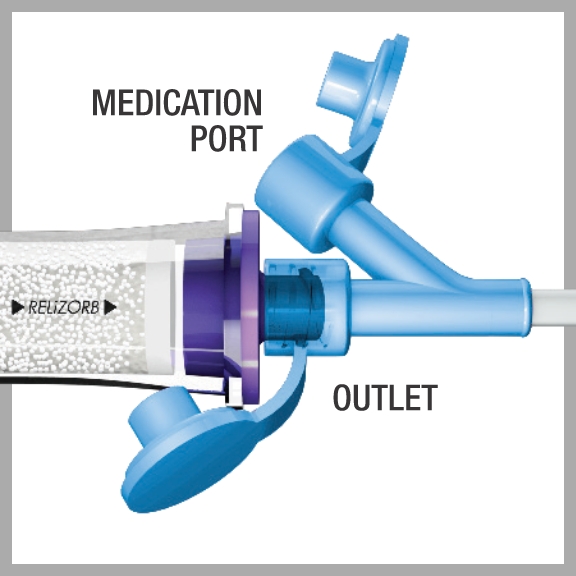
  • The passage of medications through RELiZORB may adversely affect the medications or the ability of RELiZORB to hydrolyze fats. To administer medications, use the medication port on an appropriate extension set after RELiZORB
  • Medicines and saline flushes may only be added to the tube-feeding line after RELiZORB. They may be added to the side port of a Y-connector extension set located between you and the RELiZORB cartridge
  • Always examine the RELiZORB pouch. Do not use the RELiZORB cartridge if the pouch seal is broken or if the current date is past the expiration date shown on the pouch. Do not use the RELiZORB cartridge if it is damaged or has been previously used
  • RELiZORB should not be connected to any intravenous (IV) line, setup, or system
  • RELiZORB has been tested for up to a 1-hour stop/pause in feeding with an enteral pump and shown not to change flow rate as measured by the flow of enteral nutrition through the device or how well RELiZORB breaks down fat
  • Keep all connections clean and dry when joining RELiZORB and tube-feeding supplies. Enteral nutrition residue in connections can harden, causing difficulty disconnecting

For detailed instructions, please see the RELiZORB Patient Guide.
 Instructional diagram showing how to add medications or solutions to the RELiZORB medication port during setup Chart showing RELiZORB cartridge usage limits – up to 2 per day for patients 6 months or younger and up to 6 for older patients

How patients use RELiZORB

Select an example patient below to see how RELiZORB can support their tube-feeding needs.

Daniel, age 5 months

Representation of RELiZORB patient Daniel, age 5 months
Living with short bowel syndrome - Uses 2 RELiZORB cartridges per day with continuous feeds§

Jade, age 13 years

Representation of RELiZORB patient Jade, age 13 years
Living with short bowel syndrome - Uses 1 RELiZORB cartridge per bolus feed 3 times a day with regular oral food consumption

Erica, age 16 years

Representation of RELiZORB patient Erica, age 16 years
Living with cystic fibrosis - Uses 2 RELiZORB cartridges in a tandem configuration for continuous feeds with an enteral pump

Kareem, age 70 years

Representation of RELiZORB® patient Kareem, age 70 years
Managing acute pancreatitis - Uses 1 RELiZORB cartridge for continuous feeds with an enteral pump to supplement an oral diet
Fictional patients based on actual patient experiences. The information presented is for illustrative purposes only and is not intended, nor implied, to be a substitute for professional medical advice. Individual patient profiles may vary.

ENFit® connector compatibility

ENFit is a connector designed for use in a tube-feeding (enteral nutrition) system to help reduce the risk of tube-feeding misconnections and improve patient safety. The ENFit connector is designed to ensure that only compatible tube-feeding ports can be connected.

The Global Enteral Device Supplier Association (GEDSA) and the Oley Foundation recommend the following guidance for using ENFit supplies:

  • When priming enteral nutrition through your feeding tube, stop priming before fluid reaches the end of the tube. If any enteral nutrition drips into the ENFit connector, wipe off any excess residue with gauze or tissue
  • Keeping ENFit connectors clean and dry will prevent connections from sticking together
  • Be careful not to overtighten the ENFit connector

Download the RELiZORB ENFit Brochure for more information about connecting RELiZORB to ENFit supplies.

Click here for more information about keeping your ENFit connectors clean.

* For continuous feeding, do not exceed 24 hours in either single or tandem configuration.
Do not use RELiZORB if the pouch seal is broken, the current date is past the expiration date shown on the pouch, or if the RELiZORB cartridge is damaged or has been previously used.
§ RELiZORB can be used as six 1-cartridge feeds or three 2-cartridge feeds for a maximum of 6 cartridges per day for those >6 months old. Use up to 2 single cartridges per day for those ≤6 months old. There are no requirements on the amount of time between using cartridges for either age group.

RELiZORB is indicated for use in pediatric (including neonates and infants) and adult patients to hydrolyze fats during enteral feeding.

Warnings
  • RELiZORB is for use with enteral tube feeding only.

RELiZORB is indicated for use in pediatric (including neonates and infants) and adult patients to hydrolyze fats during enteral feeding.

Warnings
  • RELiZORB is for use with enteral tube feeding only.
  • RELiZORB should not be connected to any intravenous (IV) line, setup, or system.
  • Medications should not be administered through the RELiZORB cartridge. Do not add medications to the enteral nutrition or tubing before RELiZORB. The passage of medications through RELiZORB may adversely affect the medications or the ability of RELiZORB to hydrolyze fats.
  • Fibrosing Colonopathy - Fibrosing colonopathy is a rare, serious adverse reaction associated with high-dose use of pancreatic enzyme replacement therapy in the treatment of patients with cystic fibrosis. The underlying mechanism of fibrosing colonopathy remains unknown. Patients with fibrosing colonopathy should be closely monitored because some patients may be at risk of progressing to stricture formation. RELiZORB contains lipase enzyme that is not from a porcine source. The lipase is bound to the beads, and this lipase-bead complex (iLipase) is retained within the RELiZORB cartridge. Continue to follow your physician’s guidance and porcine pancreatic enzyme labeling regarding porcine pancreatic enzyme use when used in conjunction with RELiZORB.
Cautions and Precautions
  • Do not re-use RELiZORB. RELiZORB is a single-use product. Re-use may result in contamination of the product. If re-used, RELiZORB may not effectively hydrolyze fats.
  • Do not break, alter, or place excess pressure on any part of RELiZORB. Any compromise of the structural integrity of RELiZORB may lead to improper connection to enteral feeding supplies, leakage or risk of contamination.
  • Do not use RELiZORB after the date marked on the pouch.
  • Enteral nutrition administered through RELiZORB is for immediate consumption through an enteral feeding tube. RELiZORB should not be used to process enteral nutrition for later use. This has not been tested and may result in safety issues.
  • RELiZORB is designed for use with enteral feeding pump systems with low flow/no flow alarms and enteral syringes for manual bolus by syringe (push or gravity). A detailed listing of enteral nutrition, pumps, and enteral feeding supplies compatible with RELiZORB can be found at www.relizorb.com/compatibility.
  • Patients less than 1 year old may be particularly vulnerable to unplanned interruptions of feeding.
  • Do not use blenderized formulas with RELiZORB. A detailed listing of enteral nutrition compatible with RELiZORB can be found at www.relizorb.com/compatibility.
  • Powdered formulas should be mixed periodically during feedings.
  • Do not use excessive force on the plunger when using RELiZORB with bolus syringe feeding method.
  • Do not rush bolus feeds. Follow guidance from your healthcare professional on how long it should take you to complete your tube feeding. Ensure all inlet and outlet connectors on RELiZORB and enteral feeding supplies are clean and dry prior to making connections.
  • In order to ensure product performance, store RELiZORB in its pouch either refrigerated or at room temperature (2°C to 27°C; 36°F to 80°F).
  • RELiZORB is indicated for use with enteral feeding only; patients should follow physician’s guidance for pancreatic enzyme replacement therapy (PERT) use for meals and snacks. Patients and patient caregivers should follow physician’s guidance regarding the need for pancreatic enzyme replacement therapy (PERT) during enteral feeding.

Review full product information for RELiZORB in the Instructions for Use.